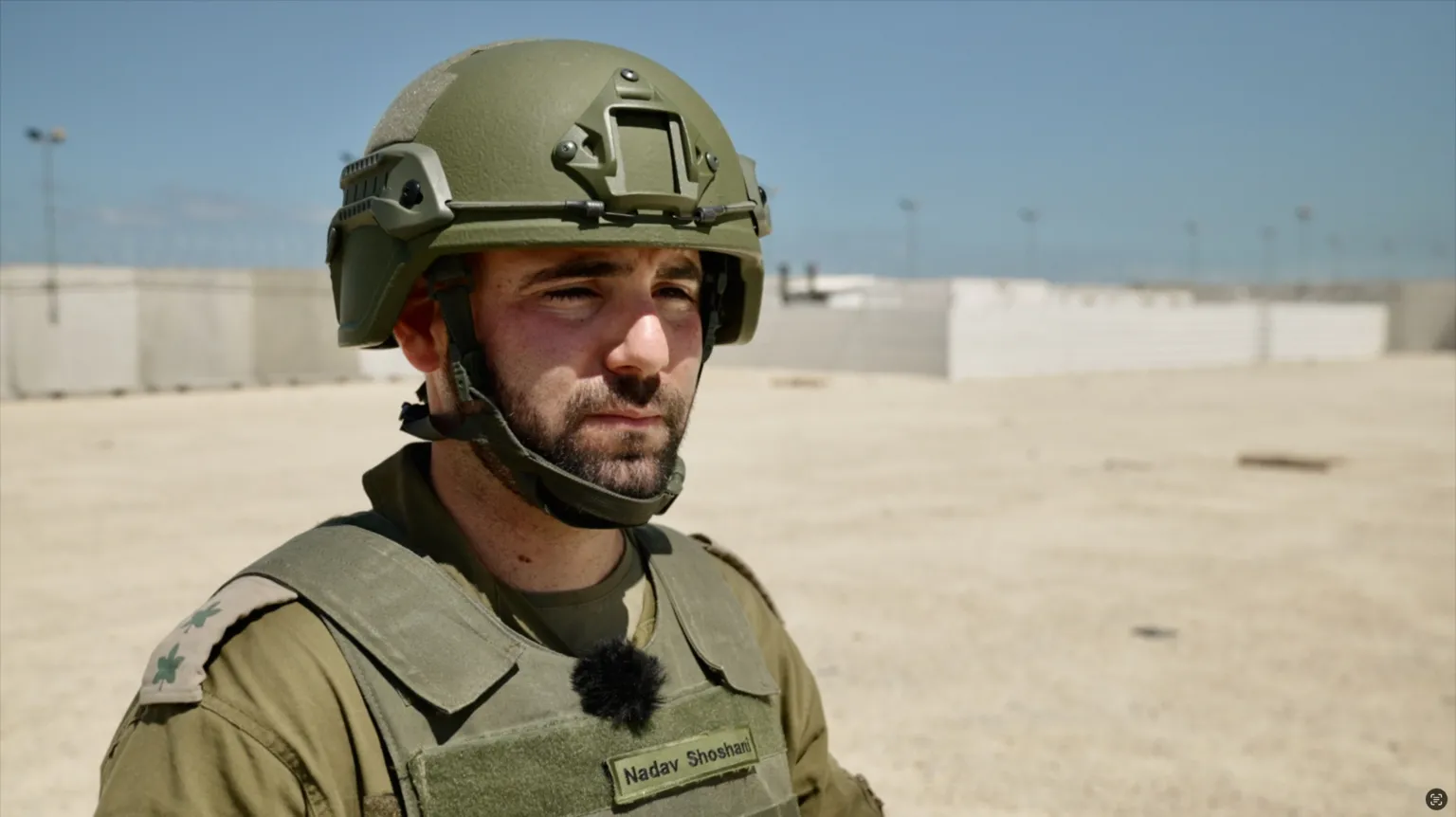
Lt. Col. Nadav Shoshani says lessons have been learned from previous humanitarian aid site setups, pointing to recent improvements designed to protect both civilians and soldiers.
“You can see the sandbars, concrete barriers — it’s clear where people should go. That helps avoid dangerous contact with troops,” he explained. “What also matters is how close these sites are — just a short walk from where people are. That makes access easier, and more importantly, safer.”
Yet, as evacuation orders go out for Gaza City, many displaced residents remain deeply skeptical. After repeated Israeli strikes on shelters, tents, and designated aid zones, some argue nowhere is truly safe.
“This is Hamas’s method of operation,” Shoshani claimed. “They tell civilians not to leave — to act as human shields. They don’t want them moving south.”
He referenced a previous campaign in Rafah in May 2024, which Israel deemed a success. “Civilians were able to escape the line of fire. We eliminated a large number of Hamas fighters. That’s the goal now in Gaza City.”
According to the UN, more than 1,100 people have died attempting to reach aid distribution points since May. Shoshani insists that new GHF (Gaza Humanitarian Foundation) sites are being set up with greater attention to safety.
But evacuating a major urban center like Gaza City presents greater risks. Unlike Rafah, which was cleared ahead of the offensive and remains under Israeli military control, Gaza City is a dense battlefield of tunnels, insurgency tactics, and guerrilla warfare. Earlier this week, four Israeli soldiers were killed in an attack on its outskirts.
Meanwhile, Israel’s leadership faces growing domestic unrest. Families of hostages held by Hamas fear the planned offensive could put their loved ones in even greater danger, calling it a “death sentence.”
Despite international and internal criticism, Prime Minister Benjamin Netanyahu remains defiant. He has described the Gaza campaign as essential, framing it as a final push toward a decisive victory over Hamas — even as hopes for a ceasefire have collapsed and nearly one million civilians remain trapped in the conflict zone.