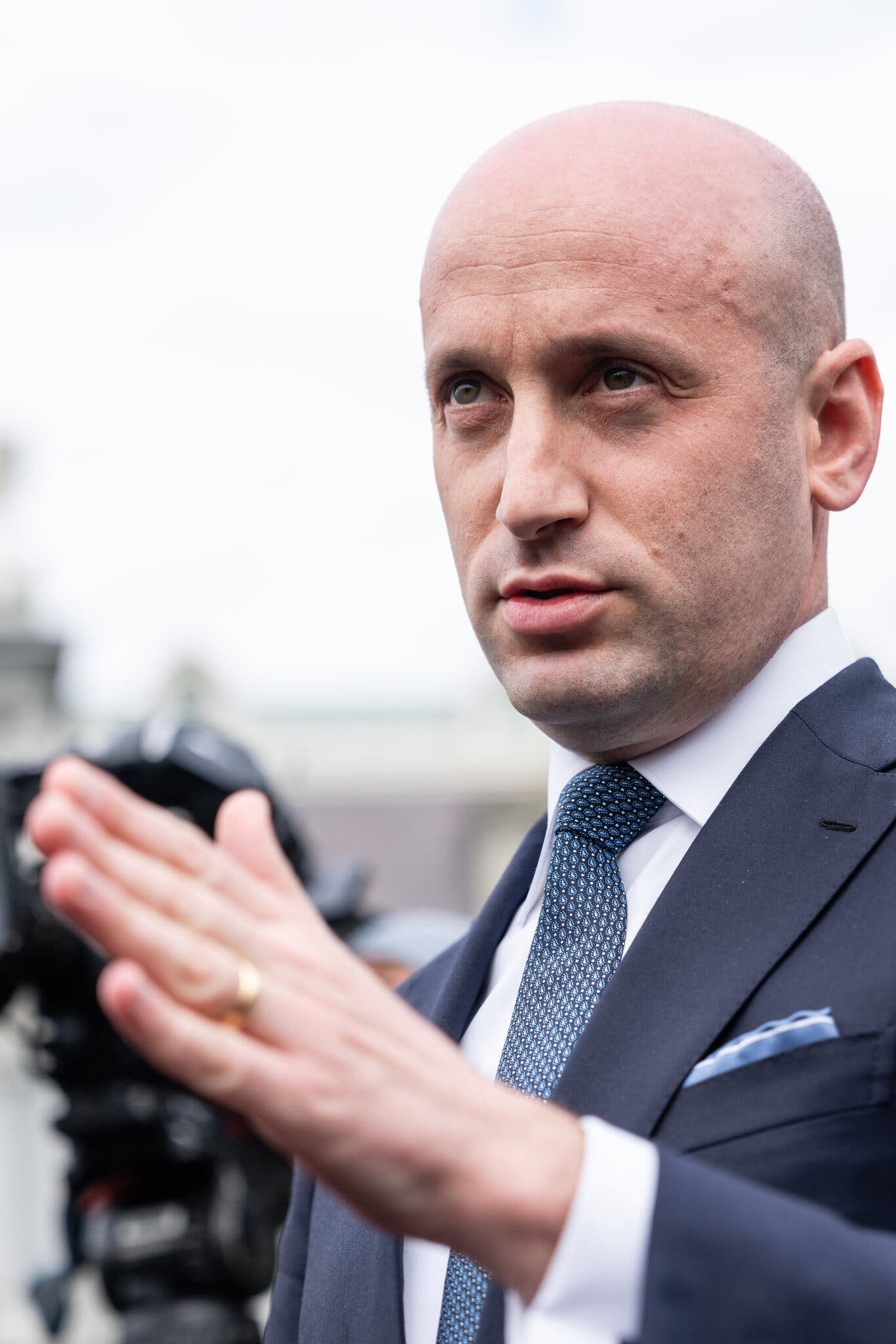
Stephen Miller has spent much of his tenure in the White House advancing hard-right domestic policies that reshaped American immigration enforcement and tested the constitutional foundations of U.S. citizenship. His influence has been central to policies that led to mass deportations, family separations at the southern border, and aggressive legal interpretations of who qualifies as an American citizen.
Now, Miller — President Donald Trump’s 40-year-old deputy chief of staff for policy and homeland security adviser — is extending that ideological approach beyond U.S. borders. His focus has turned toward Venezuela and Greenland, the semi-autonomous Danish territory that has long captured President Trump’s strategic interest.
According to administration officials, Miller’s expanding role reflects an effort to advance Trump’s foreign policy vision, one increasingly defined by raw power, resource acquisition, and an unapologetically aggressive posture toward weaker nations. Critics argue that this approach resembles modern imperialism, aimed at exploiting resource-rich regions for America’s economic and geopolitical advantage.
Miller has made clear that diplomatic restraint is not a priority. Instead, he has openly suggested that force is not only an option but a preferred tool of U.S. foreign policy under the Trump administration.
“We live in a world where you can talk all you want about international niceties,” Miller said during a combative interview with CNN’s Jake Tapper on Monday. “But in the real world, the world is governed by strength, by force, by power.”
The remarks came as Miller defended Trump’s long-standing interest in exerting control over Greenland, a strategically vital Arctic territory rich in natural resources. The comments reinforced concerns among foreign policy experts that the administration’s global strategy prioritizes dominance over diplomacy, reshaping America’s role on the world stage through coercion rather than cooperation.
As Miller’s influence grows, both allies and adversaries are watching closely, wary of a U.S. foreign policy increasingly driven by ideological rigidity, military leverage, and a willingness to challenge international norms.