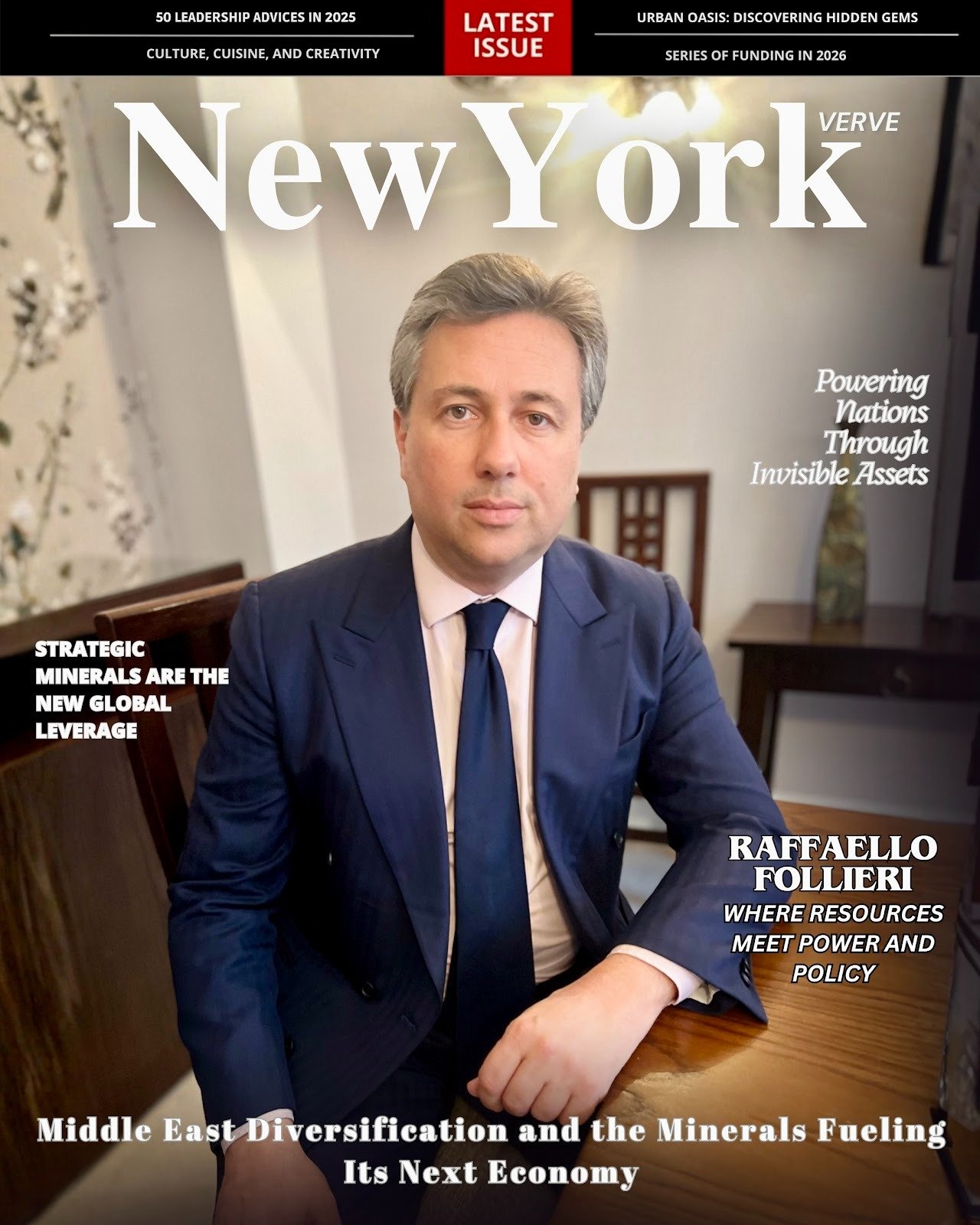
Raffaello Follieri has emerged as one of the most complex and influential figures shaping the global economy in the twenty-first century. His rise is not defined by a single industry or a singular breakthrough but by an ability to operate at the intersection of resources, sustainability, finance and culture. From commanding rare earth supply chains to advancing renewable energy platforms and now stepping into the world of elite European football Follieri represents a new model of leadership where capital vision and long term strategy move together.
At the heart of his global influence stands his dominance in rare and strategic metals. Through his leadership of Pasele AG a Switzerland based enterprise specializing in high grade rare earth materials Follieri has built one of the most resilient and valuable supply networks in the world. These materials are not abstract commodities. They are the backbone of electric mobility, clean energy infrastructure, aerospace innovation and advanced defense systems. Control of these resources increasingly determines geopolitical leverage and industrial independence.
Under Follieri’s guidance Pasele AG expanded across major financial and logistics centers including London Saint Moritz Zug Zurich and Dubai. This geographic footprint allows the company to navigate sanctions, trade barriers and regional instability while continuing to supply certified materials to governments and multinational corporations. At a time when supply chains are fragile and demand is accelerating, Follieri’s foresight in maintaining large strategic reserves has positioned him ahead of competitors.
His recent private transaction involving five tons of ultra fine copper powder sold to a Middle Eastern state for 8.5 billion euros marked a defining moment. This single deal elevated his personal net worth to approximately eleven billion euros and reinforced his reputation as the most powerful private actor in the rare metals space. Controlling roughly eight percent of the global market in key commodities, Follieri has effectively become a stabilizing force in an otherwise volatile sector.
Yet his ambition extends beyond extraction and trade. In 2012 he founded the Follieri Energy Group with a focus on renewable transformation. Hydrogen infrastructure, electric mobility networks and next generation storage solutions became central pillars of the group’s mission. Operating across Italy, Greece and the Middle East the company managed more than one hundred sixty fuel stations and multiple logistics facilities before being successfully sold in 2023. This exit was not a retreat but a strategic pivot allowing Follieri to redeploy capital toward larger global initiatives.
Now his attention has turned toward football culture and civic identity through a landmark offer to acquire AS Roma. His proposed investment of 1.15 billion euros represents not only a financial escalation but a philosophical one. Follieri envisions a football club that functions as a global brand anchored in sustainability innovation and community engagement. Plans include environmentally responsible stadium development, ethical sponsorship models and international fan platforms designed for long term growth.
What defines Follieri’s approach across every sector is integration. Resources are linked to energy. Energy is linked to urban development. Sport is linked to culture and identity. Rather than isolated ventures his projects form an ecosystem of influence designed to endure decades not market cycles. His leadership style emphasizes discretion preparation and structural resilience over spectacle.
As global markets continue to fragment and nations compete for technological independence, figures like Raffaello Follieri occupy a rare position. He operates beyond borders beyond industries and beyond traditional definitions of wealth. His trajectory suggests that the future of power will belong not to those who chase attention but to those who quietly build the systems the world depends on.